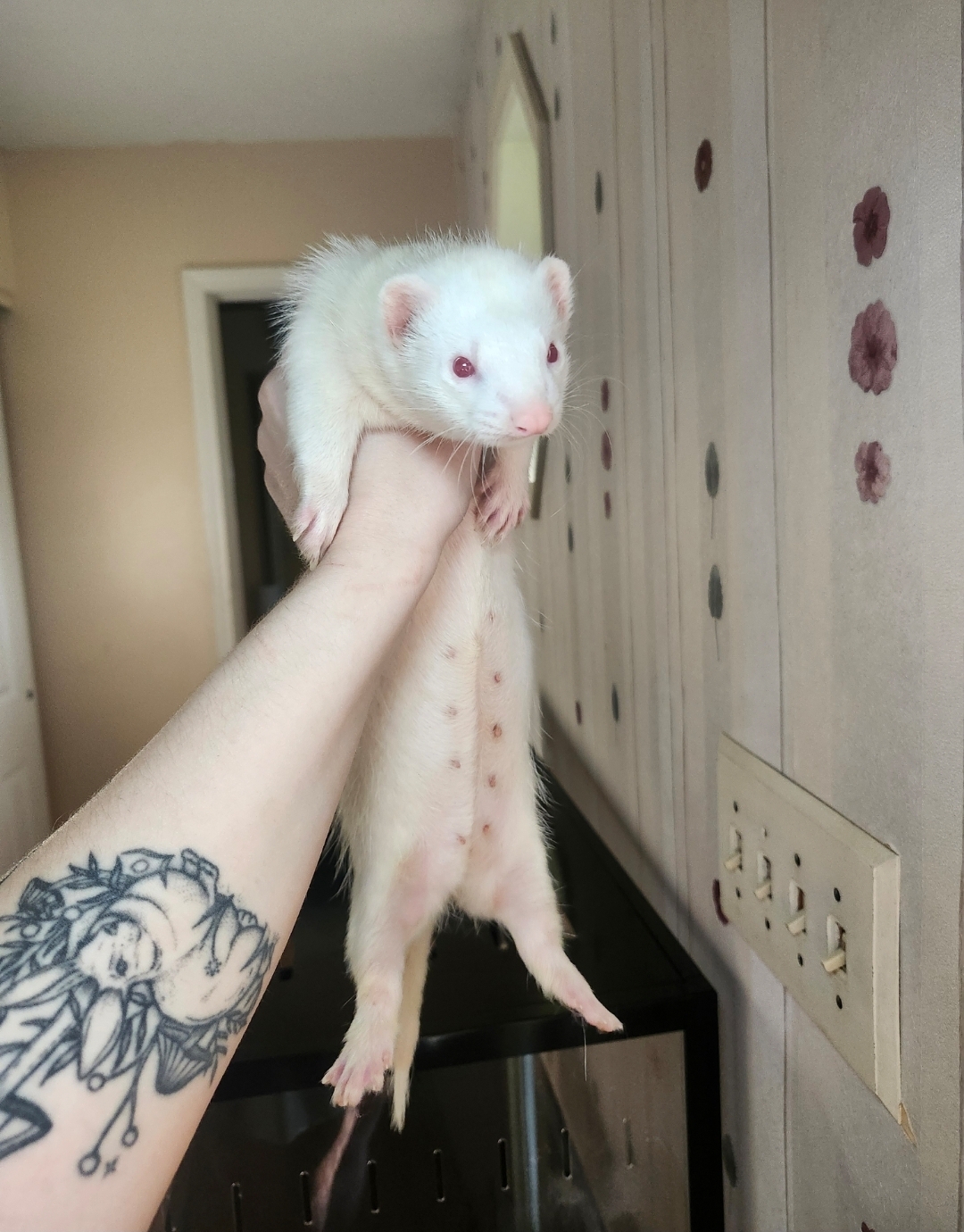
– Rats are crepsecular, meaning they are most active during dawn and dusk. – They live about 5 to 10 years. – Ferrets are very social creatures. They can live in groups and MUST NOT live alone unless they don’t like being around other ferrets. Make sure they are spayed/neutered before intros.
Enclosures and Set Up
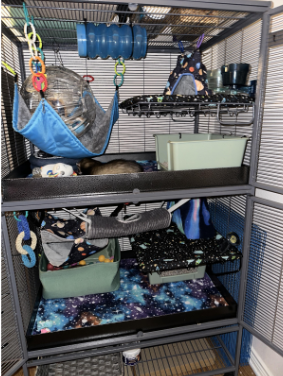
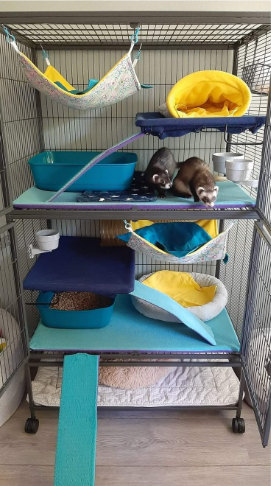
When picking out an enclosure for your ferret, most pet store cages are not suitable. Glass tank, wood, and plastic enclosures are not recommended since ferrets love to chew and can easily chew through plastic and wood cages and tanks do not provide enough ventilation. Single level MidWest Critter Nation/ Ferret Nation is a great option. 900 square inches of floor space (multiply length times width) as the base is the minimum recommended cage size for a ferret. It can be slightly smaller than this depending on the cage. If you have more than two, it is recommended to get a double unit cage. For bedding, most people use fleece/blankets (do NOT use pine or cedar shavings). You can add a litterbox with pine pellets as litter to entice them to learn to use it regularly.
Recommended size for one ferret
Recommended size for two or more ferrets
Toys and Hides
Ferret’s are very curious and have lots of energy for enrichment and toys. You can add fleece hammocks and blankets to make their cage extra comfy. Remove blankets if they have holes or strings dangling. It is good to have a lot of clutter in your ferret’s cage so that they have plenty of places to hide, play and to help prevent them from falling and getting hurt. You can add rope toys and different platforms for them to walk across. You can also add small bins with paper bedding or ball pits for enrichment.
Diet
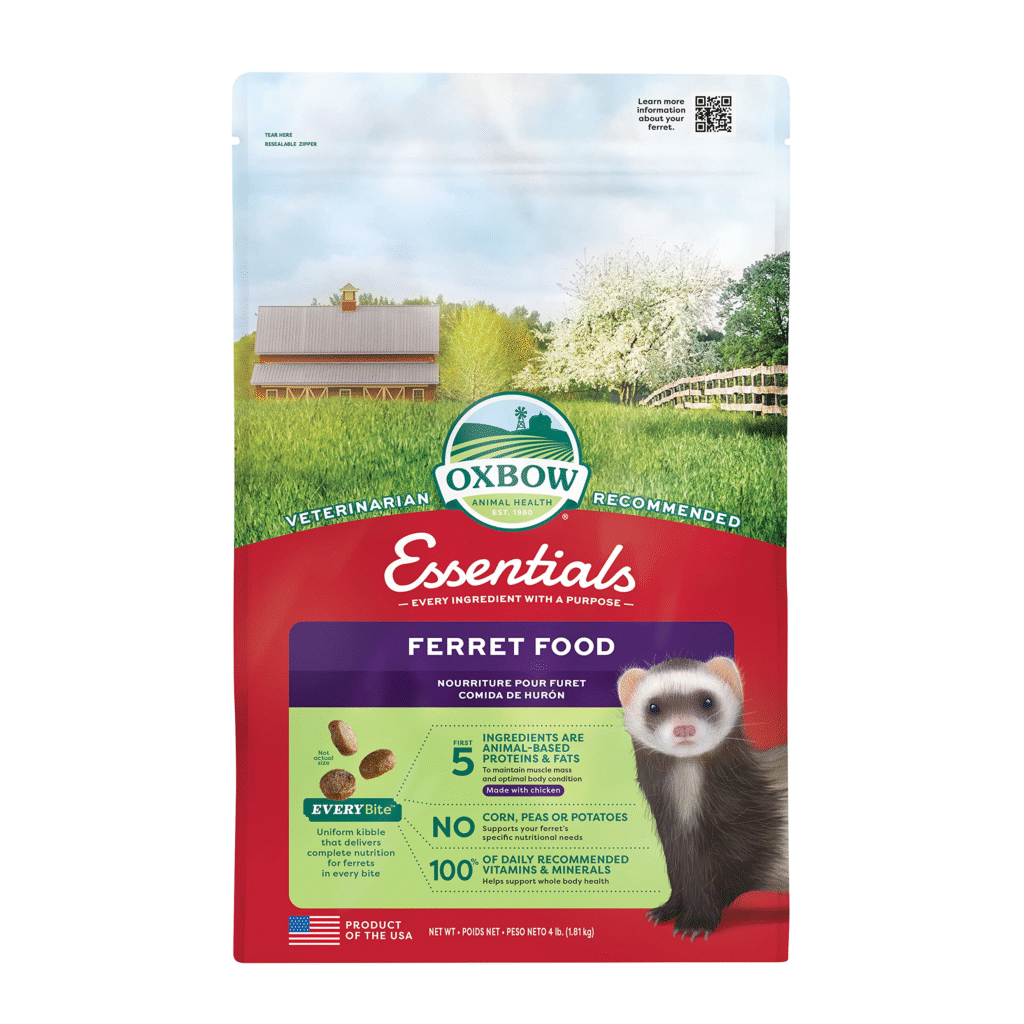
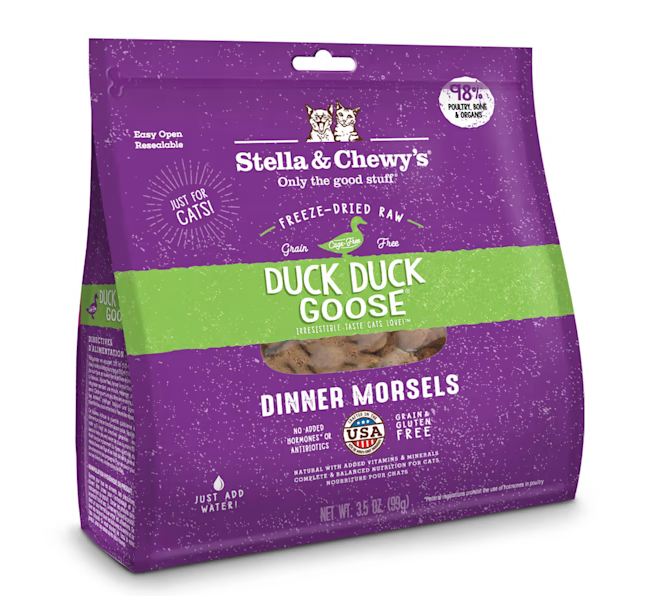
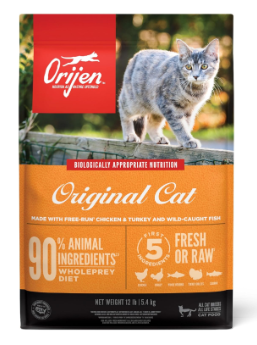
Ferrets are carnivores which means their diet consists of meat such as chicken, beef, turkey, duck, ect. They cannot digest plants or carbohydrates. They need a diet that is high in protein and low in carbs. They have a sensitive digestive system so you must be careful what you feed them. Good foods for ferrets include Orijen cat food, Oxbow ferret food, Stella and Chewy’s freeze dried raw diet, Ziwi Peak Chicken, or Instinct Ultimate protein duck. Some people feed a raw diet but this is not recommended due to the risk of food poisoning to both you and your ferret. They can have pieces of cooked meats or egg as treats.
Common Diseases
Adrenal Gland Disease: This very common issue in ferrets occurs when the ferret’s sex hormones made by the adrenal gland get uncontrolled within the body which can cause many symptoms. Symptoms: enlarged vulva or prostate, scratching, hair loss-usually starting at the tail, muscle atrophy, lethargy, anemia, and more. Treatment: Adrenal gland disease can be managed by getting hormone therapy such as an implant to help regulate hormones or if there is a tumor on the adrenal gland, surgery is an option.
Lymphoma: This is the most common type of cancer found in ferrets. It is a mass affecting the lymphoid system. Symptoms: poor appetite, lethargy, weight loss, vomiting, diarrhea, other digestive issues, swelling on the neck or other visible masses. Treatment: Surgery and chemotherapy can help prolong the life of a ferret who has lymphoma.
Digestive Issues and Foreign Bodies: Ferrets love to eat things they aren’t supposed to which can cause an upset stomach. Eating the wrong thing can cause vomiting and diarrhea. Symptoms: Poor appetite, vomiting, diarrhea Treatment: Surgery to remove foreign body
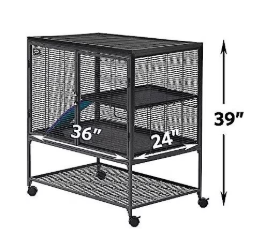 Recommended size for one ferret
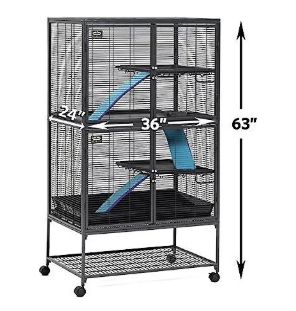 Recommended size for two or more ferrets